Audit Log for Flywheel Ingest
Introduction
Each time you upload data via a CLI ingest command, an audit log is automatically created that you can use to verify your files were uploaded as expected. This log file describes where Flywheel placed data and if any errors occurred that prevented files from being uploaded.

Instruction Steps
The following CLI commands produce an audit log:
Where to Find the Audit Log
View the log from the project or use the CLI to download it
Attached to the Project
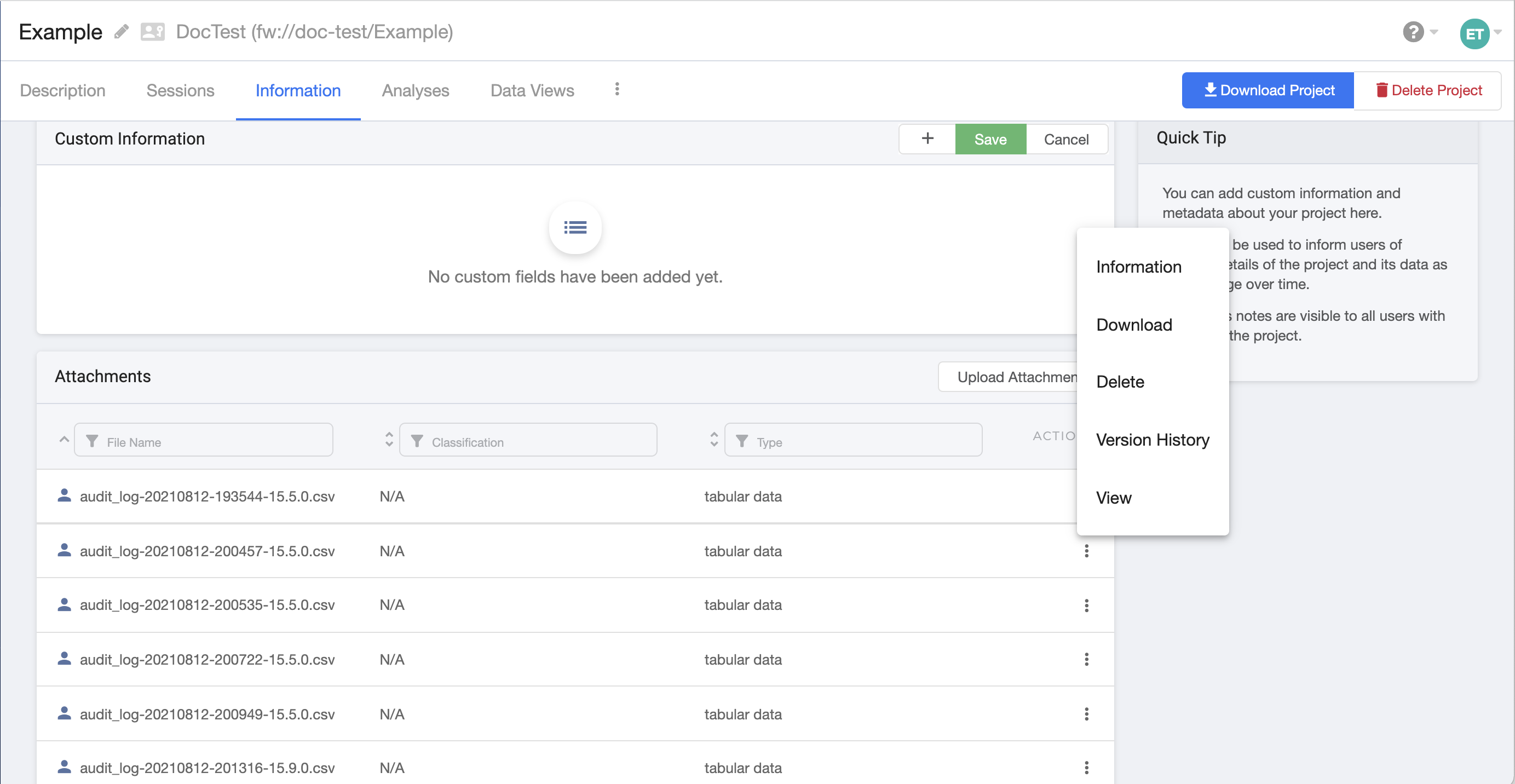
By default, the audit log is attached to the project where you uploaded the data. To view or download the log from the project:
- Sign in to Flywheel, and navigate to the project.
-
Click the Information tab.
-
Go to the Attachments section. You can sort or filter attachments using the fields at the top of each column.
- To view the log or download it to your computer, select the options menu
 .
.
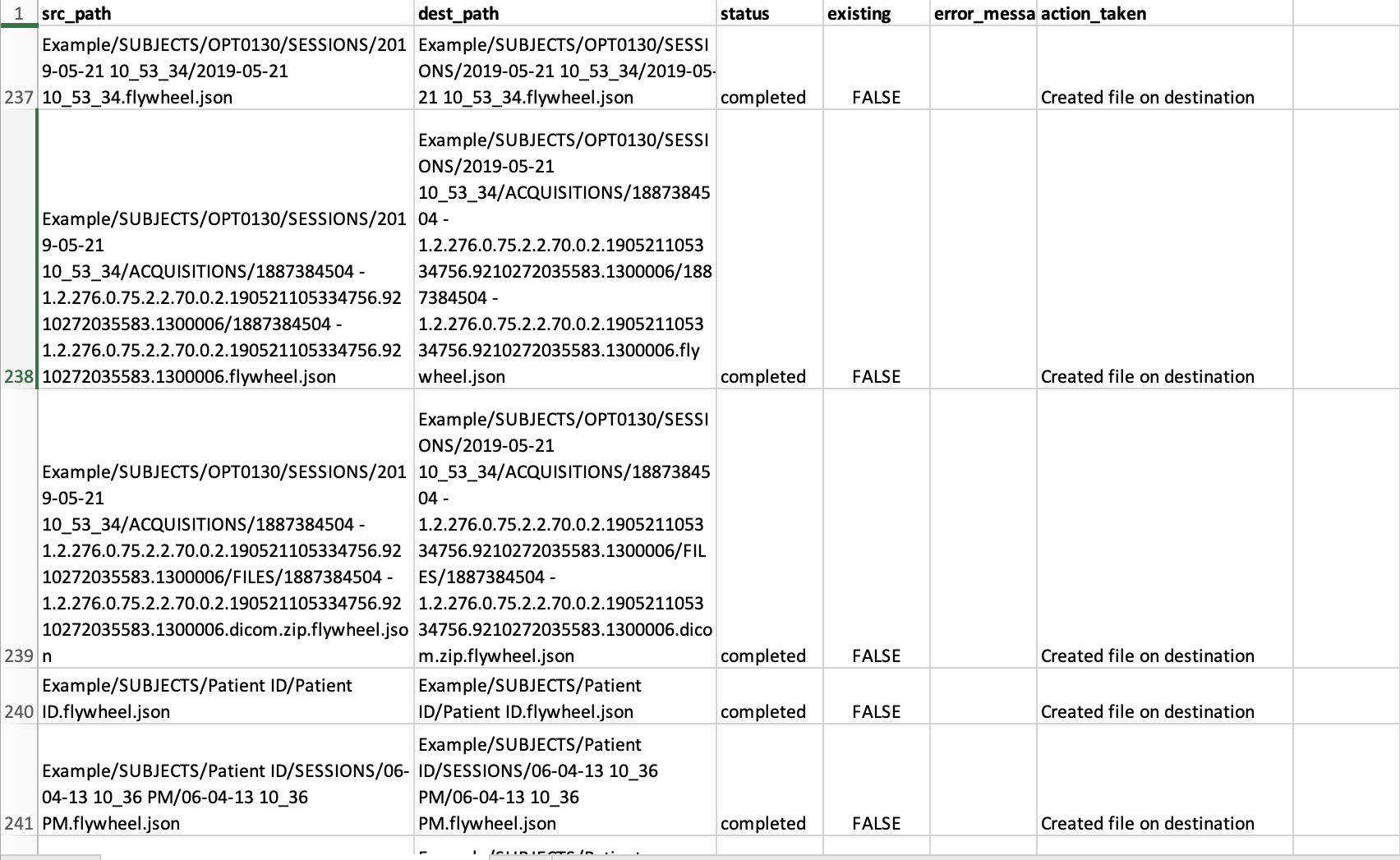
Below are some example audit logs:
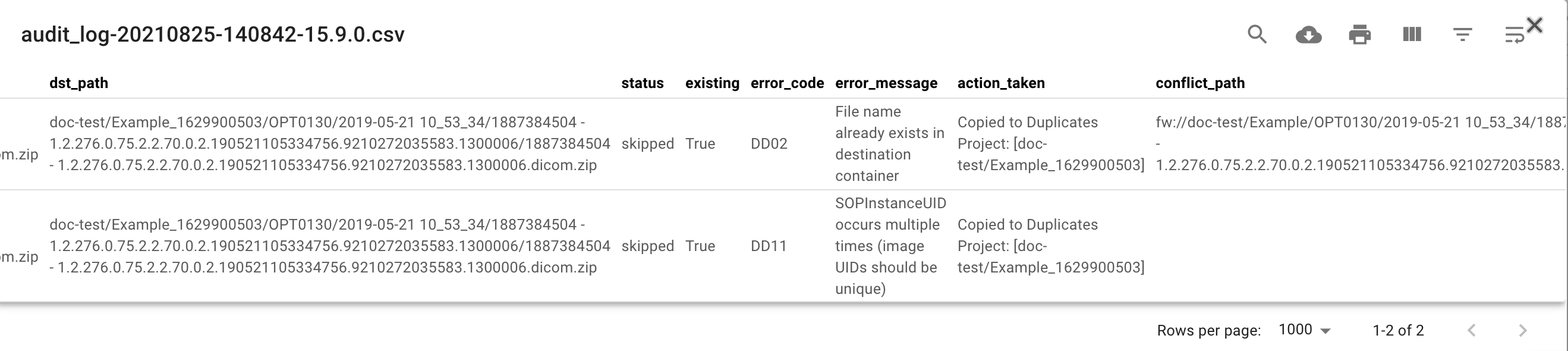
Below is an example of an audit log when the --detect-duplicates flag is used.
Download from the CLI
You can configure the Flywheel CLI to download the audit log to your computer:
- To save the audit log to your computer when using the CLI to ingest or sync data, use the
--save-audit-logs PATH -
Update PATH to the location where you want to save the log file on your computer. The PATH must also name the audit log as a CSV file. For example if you want to name the file
AuditLogExample.csv:fw ingest dicom --save-audit-logs ~/Documents/Logs/auditLog.csv ~/Documents/UploadData mygroup "My Project" -
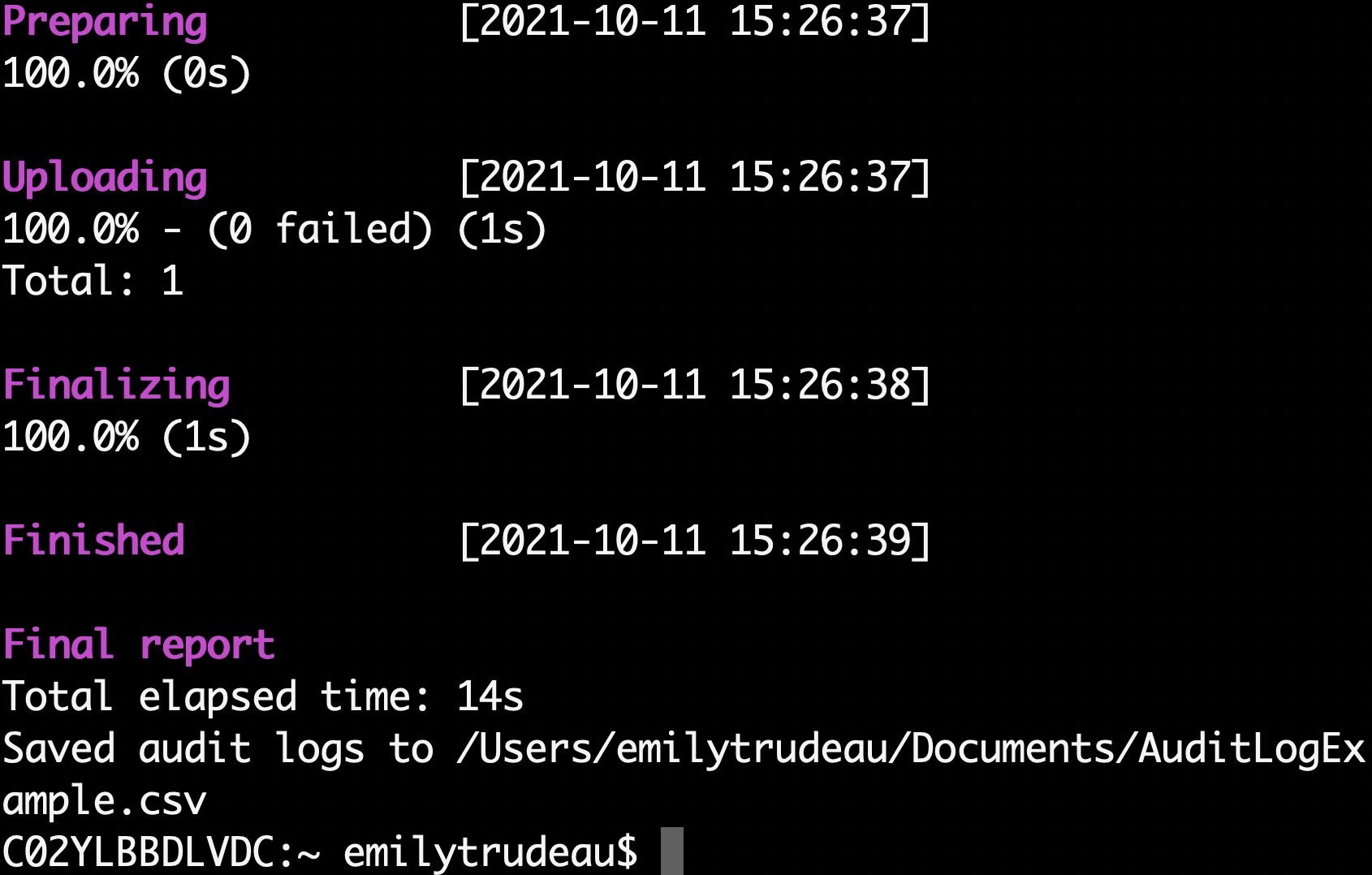
Once complete, the CLI displays a message confirming where the audit log was downloaded.
Retention
Audit Logs are added as Project Attachments and are retained indefinitely unless a user deletes the file or Project.